Thursday, June 10, 2021

Sid Meier's Civilization: Beyond Earth.

I have always been in a weird place where I like 4X games...but don't like Civilization, the Sid Meier's Video game.  For those who don't know what 4X Means, it's a video game where you basically are contrlling a nation or empire, where you have to eXplore, eXpand, eXploit, and eXterminate.  ...could also be called 4E, but X sounds cooler.  Anyway, diplomacy, research, battle, and economy are all part of 4X games, along with several other features.

Anyway, nowaday disliking Civilization but liking 4X is easy. There's tons of different 4X games with different factions, stories, and most importantly, different gameplay mechanics.  

This was not the case before Endless Legend from Amplitude came out.  Before Amplitude, Civilization wasn't just considered the 'most popular' 4X game.  It was considered the be all and end all of 4X games.  Nothing could be better then Civilization, so everything was the same as Civilization, with just slight variations in gameplay, even if setting and factions were radically different.   I said this before in my Mandalorian TV show review, and I'll say it again: Don't think the current 'best' of something is the be all and end all, think of it as a starting point for something better. 

So I was an odd one.  I didn't like civilization but wanted to try 4X games and bought quite a few of them.  To be fair, it wasn't the gameplay that I hated about civilization, it was the setting and factions.  So I was easily pleased by just a change of scenery if not actual gameplay.

But then Endless Legend came out, and I realized how shamefully unfun Civilization had been.  I could go on all day and night about how much I love Endless Legend, but that's not what this review is about.

This is about Civilization.  IN SPACE.
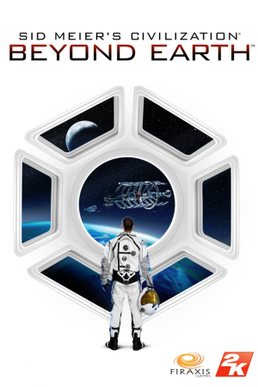
Sid does seem to love his hex tiles...even the windows are shaped like one!

But any talk about civilization in space will have to start with Sid Meier's Alpha Centauri, the original civilization in space, made way back after Civilization 2.  For reference, Civilization 6 is its latest installement.  But I know very little about it, aside from the fact that it has some very die hard fans and was apparently very good.  So Beyond Earth was said to be a spiritual successor to Alpha Centauri before Beyond Earth was released. 

Anyway, the premise of Beyond Earth is it's 2210, and earth is in bad shape.  So the current nations and corporations of the future-earth start building space ships to colonize different planets across the universe.  

You start the game by picking a sponsor, which include futuristic but familiar-ish names such as Polystralia, Peoples African Union, American Reclamation Corporation, and Brasilia.  That's only 4 out of 8 Sponsors in the base game, 12 total with the only expansion, Rising Tide.  

You might think picking a sponsor would completely change how you play the game, like Endless Legends did with its factions.  Nope.  instead you get a small  bonus to certain things, and that's it.  Really, the other options you pick before you start a game have just as much if not more impact, and none of them really change the game, only slightly change choices at the start.  As an aside, Sponsors also decide what leader you play as.  

Instead of  what you decide to be mattering, the idea is that what you do on the new planet matters more then what you were on earth.  While an idea I can get behind, they didn't go far enough with it.  While each building you build in a city get a permanent buff via a decision you make, the buff is small and only one option out of two.  What if it was three options?  What is, for example, you had the building the Rocket Battery be A: A orbital satellite slayer but weak against ground troops, B: An artillery platform that can decimate ground troops, or C: Somewhere in-between but not great at either.  

 Behold!  Beags Ville!

But I'm getting off track.  To bring home the idea of what you do ingame is more important then what sponsor you pick, there are quests that give you affinity levels in one of three groupings, Purity, Harmony, and Supremacy.   Purity ideology believes humanity was and is perfect, and anything alien should be rooted out.  Harmony believes to survive humanity must evolve with nature and become more alien like.  Supremacy is somewhat in between but believes that humanity can be perfected via machinery and that the new world must be dominated.  Different buildings require different levels of different Affinitys, and raising affinity levels are required to upgrade military units.  I will admit being able to pick different bonuses for military units is neat.

But this still isn't enough, it's not until late game that really differences in play happen, and even if Harmony, Purity, and Supremacy factions played completely differently,  that's still only 3 factions, a pitiful amount honestly.  

I do however, praise the tech tree, or rather, web, as it is a branching web instead of a linear tech tree.  The fact that two players can have completely different techs but still be the same 'power level' as it were is a nice addition, one I wish Civilization games had more like it.  

The base game of Beyond Earth is unfortunately, fairly bland and safe, even with the sci fi twist.  So I give it a 3/5 stars, at best.  Honestly 2.5/5 is more accurate.  But we haven't delved into Beyond Earth: Rising Tide.
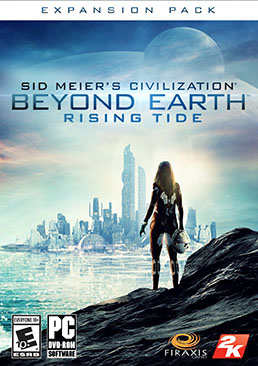
Lady put your helmet back on!

Rising Tide is the only expansion to Beyond Earth, and as you might guess it revamped the games navy combat and water features, including the heavily touted floating aquatic cities.  But it also revamped diplomacy, added new sponsors, and added new 'artifact' system of gameplay.

Honestly Rising Tide's feature of upgrade water gameplay features was the least interesting and exciting upgrades to the game.  The diplomacy updates and introduction of a new currency used exclusivity in diplomatic international exchanges, were far more welcome, and in single player actually gives each NPC colony leader new life and lines and ways to react to what the player is doing.  

With Rising Tide, I give Beyond Earth either a 3 or 3.5 out of 5 stars.  It's a much better game, and a good intro to 4X games.  unfortunately, for a veteran at 4X games it's not that good.  I've heard it is a poor spiritual successor to Alpha Centauri, but having never played it, all I have is hearsay.

That's all for now, hopefully I'll put out some drafts soon that I've been (slowly) working on.  I'd say them here, but from those that remember my Evil Genius 2 review, I don't keep my word if I do. 

Tuesday, May 4, 2021

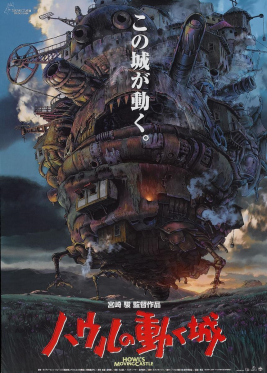
Howls Moving Castle (2004 film)

Dear Studio Ghibli, 

This is Werebeagle.  I am a new consumer in anime, having seen very little of it before seeing a major film of yours, specifically Howls Moving Castle.

I told you we shouldn't have let the scrapyard rednecks build a castle!

I have never read the book it is based on, but from what little I know of it, it's loosely based on the story, and explores different themes then the films.  Not that there's anything bad with that, a film adaption of a book can go a different direction then the source material and still be good in it's own right.  

The early 20th century technology yet still fantastical set pieces mixes familiar and new things to make a blend that is in my opinion, extremely refreshing and a wonderful setting for a fantasy story.

The basic premise of the story is that a young girl, Sophie, is cursed by the Witch of the Wastes into being an old woman.  So she sets off on a quest to find a wizard to remove the curse, and comes upon the titular Howls Moving Castle.  This story is set against the backdrop of two nations going to war over the disappearance of a prince.  This sets up anti-war themes for the film.

While I respect the anti-war themes and know you made the the film as a response to the USA invasion of the Iraq, and some of the metaphors I respect and understand (Like the wizards who turn themselves into inhuman creatures to fight in the war, and won't remember they were human after the war) but some seem to be a little confused.  Like Howl, who doesn't want to fight in the war in either side, ends up fighting both sides?  And this slowly turns him into a monster?  I'm not quite sure what you're trying to say here.

The plot and story, while slow to start, is pretty damn good...up until the second half of the two hour film.  then I start to get confused, and it seems like some scenes or pieces of dialogue were missing, which left it feeling rushed and me feeling confused.

It goes without saying the animation is beautiful.  Even for a film that is more then 15 years old, it is a joy to watch for animation alone.  It is gorgeous, and I could've watched it just to see things move, with no dialogue.

The English voice acting, is very good, with some big names for the time doing voices.  All but one of the voice actor (I won't name names, Blythe Danner, but I'm looking at you.) did a good job.  As I did not see the Japanese version, nor do I speak it, I cannot say how good it is in the original Japanese.

The music, while I hear got some awards for it alone, was mostly forgettable or unnoticed by me, sadly.  While pretty, it was at best unobtrusive.

While I give your film a solid four out of five stars, it did not make me want to watch Howls Moving Castle again, nor watch more of your films.  While I'm willing to try again some time, possibly with Spirited Away, I'm afraid for now I'm not a fan.

Your missed-chance-fan, 

Werebeagle.

Thursday, April 8, 2021

Evil Genius 2: World Domination

Stop me if you've heard this before: An egotistical insane megalomaniac plans to launch a plan to become the most powerful man in the world, or even...destroy it.  It's up to the charming and plucky super spy to save the day and get the girl, whose name is...John Steele?  Wait, who...?  Where the hell is the right script...!

Apparently that was the right script, and today is not a James Bond film, but instead Evil Genius 2, a sequel to the 2004 game where you played as a cold war era...bond villain, pretty much.  And yes, John Steele was a James Bond clone.  As you might guess, you have to try to take over the world and become the most powerful criminal in the underworld, and keep the forces of Justice from stopping you.

I personally would trust this man who is holding a globe and grinning evilly.  Wouldn't you?

Evil Genius 2 does not deviate from this set up, although it takes place...uh...I really have no idea when it takes place, but enough time after the first one that a middle aged man turns into an old man and a child turns into a man.  20 years, I guess?

Anyway that's not important, what is, is the fact an Evil Genius did take over the world in 1, and then lost it.  I'm not really sure what's the point of that, but you can choose as four Evil Genius's, Maxmillion from the first game, the only genius returning, Red Ivan, a henchmen of the first game that is now a proper genius, Emma, an former spymaster for the forces of Justice, and Zalika, who...does...science?  

Despite my confusion on Zalikas motives, objectives, or why she does anything, (confounded even more by the fact I have an RP character by the same name.) each Genius does have a distinct flavor and even personality.  A weird thing is all the lines of the Evil Genius's are voice acted, but only the main mission ones have written dialogue just for them, all side objectives voiced dialogues all the same line, just different actors.  Anyway, Rebellion, the developers, claimed that each would have a unique play-style.  Do they?

Eeeh, not really.  Honestly I found the different choices of islands more game play changing then anything else.  But each island does feel, look, and force you to build differently.  For example, the firs toption island gives you ton of access on the first floor of the mountain, and you can safely build in a cluster keeping your rooms close by so minions don't have to run around so much.

In the second option, the island is separated into two islands that are bridged at the top, meaning you'll need to effectively make two bases of operation, but the corridor leading to second island can be filled with traps to kill or deter others.

The third island is called "The Donut".  And it is donut shaped, meaning I had to build three bases around it, because it takes FOREVER for minions to walk around it.  also unlike the others, I added a secondary door leading from my cover operation.

Yes, in Evil Genius 2 you get a cover operation, a casino, that starts off abandoned by soon will be filled with valets doing whatever you want them to do to keep the forces of Justice deterred and tourists clueless.

Minions are separated into four types, the basic worker, the Muscle minions, the Science minions, and the Deception minions that go from a simple valet all the way to a counter agent.  All minions start as workers and need to be trained up into one of the three types.

Anyway, onto my opinion on the game: The game is gorgeous.  It's stylized just right in a cartoon way, doesn't require too much space in the hard drive, and looks amazing.  While I can see why people would say the game took away the cold war super spy villain theme and feel, as to me it seems more like weekend cartoons now, I personally like it, even the bad humor, because bad puns and jokes are my jam.  

Building the base is also easy and much less of a hassle in this game then the first, as you unlock the ability to use the cover operation almost immediately, thus allowing you to plan your operation around that instead of it being unlocked after you've built your base in Evil Genius 1.

Unfortunately that's where the 100% good things in my eyes end.  The art style and base building are it.  The UI and hints and tips for how to do things are...extremely absent.  Despite the UI constantly going off and being very shiny and annoying, they do not tell you what to do much.  There were several times in the game I had to stop and think about what to do as the game never told me how to do it.

The tutorial also is extremely long, and that's okay, but, for some reason, the tutorial makes the game so much easier.  I had to restart one of my games because I failed at the start of it, my evil genius died. without the tutorial, your thrown into the deep end of the pool, with agents coming immediately after you instead of no agents until after the tutorial, and no way to defend your Evil self.

This loops into another problem, Investigators, the easiest to kill of all forces of justice, do not in fact, get killed easily.  they have 75 health to start with, that's 25 more thne your minion, they also take less damage then minions from attacks, AND they have guns that can kill a worker minion in one shot.  

Honestly I found it was much easier to just let the investigators go, unlike from what I remember from the first game, they do not summon tougher enemies, instead they just summon more investigators, which you can also let go.  Supposedly higher heat levels, aka, how prominent the forces of justice view you as a threat, mean more tougher enemies, but I have yet to come across anything.  Even soldiers are easier to kill then investigators.

This killed the game for me.  Why even bother if the forces of justice pose no threat?  But oh dear reader, there's so much more to complain about...

You might want to stop at the drink counter I built just for this.

The forces of Justice in both games are called silly acronyms, SMASH, HAMMER, SABRE, PATRIOT, and ANVIL...but in the first one HAMMER was obviously the soviet union, PATRIOT was America, ANVIL china, SABRE britian and most of Europe, and SMASH....was everything else, really. PATRIOT had all of north America and japan as well, HAMMER was eastern Europe and Russia, along with the middle east.  Sabre were all the British colones and western Europe.  Get the picture?  Well don't, because in Evil Genius 2, they just group them all by continent instead of by lore or political power like the last game.  So the British SABRE is now all in Africa, and HAMMER controls all of Russia, Europe, and Japan.  What is even going on?

To make matters worse, despite there being around a dozen henchmen in The original game, only two come back. This isn't a huge problem for me, but I could see why it would be for others: It feels like it's barely connected to evil genius 1 for some people.

Of course, I forgot the most important thing of EG2: The control room.  you use Radio relays to send minions out into the world, and this is how you get money.  The problem: The map quickly becomes cluttered and instead of being able to zoom in on an important missions, you have to manually look for one.  The lack of info on important things doesn't stop there, you are notified when a group of JUSTICE workers are coming, but never -where they are-, and sine there's no way to differentiate them aside from manually looking, unlike in the first game which had a mini map showing good guys trying to stop you, you just have to zoom in and look.

In original evil genius 1, the radio relays had to be manned to provide a bonus, but in 2 they do not.  I would be fine with this, if it weren't for the fact Minions will still man them.  and get tired from working on them, despite there being no benefit from it, and this stops them from working on things that DO give you benefit if a minion works there.

The simplifications of the evil genius formula, the ones not listed here, anyway, are hit and miss for me.  some work well, like not needing briefcases to carry gold around, some do not, like the above mentioned radio relay problem.

So why do I have 60+ hours on this game?  For one, the campaign is extremely drawn out, it took me at least 50 hours to complete it.  I didn't speed run, but I didn't dawdle either, and because of some insane reason, side objectives expire if you go too far in the campaign.  It's extremely annoying, and on top of that, the loot you get that is not just gold, examples being the Trojan Horse, a dodo, and godzilla's egg ,all are not worth the effort to actually get them.  this game is extremely grindy.

So, why am I still playing it?  Uh...well....shit man, it's merely because of Brian Blessed, okay?  He's the voice actor for Red Ivan, and he is amazing.  I mean, look at him!

I meant Brian Blessed, but this works too.

 So yeah, I'm playing the campaign for the second time just as a different genius, all for a voice actor.  Help.

Anyway, this is all for now, have fun and stay safe everyone.

Also, I plan on reviewing a bunch of games about evil characters being the protagonists.  While I have a lot more that I could use in the backlog of 500+ games I own, we're just going with Dungeons 1, 2 Overlord 1 and 2, Evil Genius 1 and 2, and Attack of the Earthlings.  I think 7 game is enough for now, and I am doing these in no particular order.

Saturday, February 27, 2021

Anno 1800

Losing power for four to five days really taught me to appreciate electrical power more.  So what better way to celebrate electrical power then play a game during the time period it was invented in?   As such we move onto the latest game in the Anno series, Anno 1800 set during the industrial revolution!  And yes, in the late game you get to harness electricity, and it's an important gameplay element.

Such a beautiful image full of pollutants!

Anno 1800 has a story mode like Anno 2205, which after it completes turns into sandbox mode, or you can jump straight into sandbox mode and skip the story which is basically just anno 2205's story except in the past.  I won't spoil it, not that there's much you can't guess what happens yourself, but it involves you being a rich sibling, building a shipping company from scratch, the mysterious death of your father, and a sale of land to a rebel group against the British Empire.

Unfortunately, the story leaves many things unanswered, but acts like it had no loose strings after finishing.  Just like Anno 2205's forgettable story.  I completed it once, and now when I build cities I just skip to the sandbox mode.

Anno 1800 also took from anno 2205 the difficulty, uh, calculator and such.  By calculator I mean you can change various things, from the amount of money you make from taxes to the amount of fertilities on islands, to how aggressive and how many NPC opponents you have, and it tells you how difficult you just made the game, assigning one of three difficulties to you.  I always play on standard for two reasons, standard slash normal difficulty is how most game are usually supposed to play on, and I am also not good at economics or city building. 

Unlike Anno 2205, there are NPC parties trying to outcompete you in the game, and they can and do go to war against you.  Luckily, you can make warships and cannons and later even bigger and meaner weapons.  I am grateful for this, as pirates will always be a problem in Anno 1800, on both core game maps.

Yes, anno 1800 uses the same mechanic as Anno 2205, but instead of multiple maps, there are only two large ones with different islands on them.  They also bring back Fertility, meaning what plant or something can grow on the island, so colonizing different islands is a good idea and needed to even in the early game.

Anno 1800 also improves on the workforce of anno 2205, so each of the four tiers of residences in the city gives workforce, which is then expended in, well, factory's and farms and the like.  certain buildings need only farmers, for example, while some need workers or artisans.  SO you need to keep a stable of lower residences that might not net you a lot of taxes, but are needed nonetheless.

Each residence has needs and luxury items they want, and you'll want to fill all of them, since luxury items more often then not give cash as well as happiness, and happy citizens make festivals which make even more money.

You might get to Artisans rank, the third tier of residents, and think this game is pretty easy.  But then, you upgrade them to engineers, and I find my profit plummets, because they want things that need factory's that have -power-.  Those bastards.  Oil is used to make electric power, and it is only found on starter islands in the Old World.  in the New World, it's found pretty much everywhere, so you'll need to make trans Atlantic routes for your ships.

Shipping and making things is the main part of the game.  The mix of new mechanics from anno 2205, and the previous annos makes this a highly enjoyable game for me, and I already have...way too many hours spent in it then I want to admit.  The influx of DLCs that add more complexity and mechanics to the game is still ongoing as of this writing, and the 3rd year of DLC is still being made.  I Highly look forward to it.

Thursday, February 11, 2021

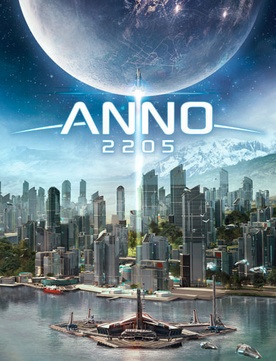
Anno 2205

 Anno 2205.  It's...I mean....well...you know...

It's hard to put into words for me.  I both enjoy and dislike the game.  As you might guess, Anno 2205 is set in the distant future, but still on planet earth, but, the whole storyline is about going to the moon for colonization purposes.  So let's put on our dancing shoes and learn to moonwalk.

Look, you try to come up with something funny from this.

Anno 2205 simplifies the entire Anno premise from the previous games.  While I applaud the UI simplification and how some buildings work, they removed a lot of features from previous Anno games.  Most notably, all of the islands in a map automatically trade resources between them, including manpower, which is required to run buildings now, and power.  Fertilities between different islands are gone as well, meaning you can grow any type of crop on any type of island.  Other players, AI or human?  Gone.  having to protect your islands from pirates? Gone.

Before this sounds too depressing, you get more then nine maps to build cities in.  However, each maps is basically it's own island, meaning you trade between maps, and not islands.  To make things a little bit more depressing, the maps are divided into three, uh, biomes?  Types.  One is temperate, where your biggest cites are going to be.  Arctic is where you build specialized items to ship to the temperate maps, and Lunar maps are a late game addition that give you energy to transfer to temperate maps.  There is little diffrince between the differnt map types, meaning the same production chains adn goods can be made or grown on all of the maps of the same type.  IE, you can grow rice in all temperate maps, lunar crops in all moon maps, and fish farms in all arctic maps.

In the place of war between different players, we have instead 'crisis missions' where it's more of a classic RTS where you lead a small fleet of ships against inexplicable large fleets of mercs.  While I found these enjoyable, they are no replacement for the pirates and war hungry players in other Anno games.

Production chains are also simplified, except for very late game ones.  But, there is one thing Anno 2205 does well: statistics.  By that i mean you get a clear number representing how much demand of a product you need, how much your making to meet it, and the total you are producing after demand takes some away.  I sorely missed this ease when playing Anno 2070.

Overall, Anno 2205 is a poor entry into the Anno series, simply because it simplifies all that makes Anno a good game series.  But, depsite this...I really like it.  I'd give it a B rank.  Why do I like it?  Because it's a simple, easy going city builder.  Combat is completely optional, making produciton chains is easy, and all you have to worry about is having enough power so your citizens don't complain the TV isn't on 24/7.

So yeah, most people who are avid Anno fans wouldn't like it, but, I do because for me, it's what City Skylines is to a lot of people. (City Skylines is a modern day city builder, with less empathize on making goods and more on just building services and residential areas.)

Anyway, next time will be Anno 1800, which to me is the best on yet.

Wednesday, January 27, 2021

Up, 2009 Movie

As I am having a hard time putting Anno 2205 into words, let alone a review, instead have this review of the Pixar movie Up.

Yeah, we're not in for a serious journey here, people.

So Up is an 3D animated movie by Pixar and Disney, about an elderly man who, using balloons, flies his house to South America to fulfill a promise he made to his late wife.

Despite being a kids movie, Up puts some heavy subjects on the table, most notably failure and death.  But I'll go on about the plot and my theories about what its trying to tell the viewers later.

Up is fantastic to watch, both in the animation and the cartoony style they chose to create in.  The animation flawless, and even now, more then ten years later it still looks good. The voice acting is also excellent, writing is almost perfect, and otherwise your standard good Pixar movie.  Seriously, Pixar is scarily good at making movies.  The only downside I felt when watching this movie was that the final scene(s?) felt a little over the top, but, it's about a man flying his house with balloons.  How more over the top can you get?

I would be disappointed in myself if I didn't mention the first ten minutes of the film, or rather, after the first five but before the first 10 minute mark.  The first part of the film introduces Carl the elderly man, as a kid at this time in the movie, meet his future wife, also as a kid, and set up some backstory that seems meaningless but has a point later.  After they first meet, it shows them getting married, getting jobs at a zoo, and growing old together.  It's an amazing sequence, done entirely without any dialogue or spoken words.  I would have paid admission for the movie, shown just that scene, and go out satisfied.  

Well, satisfied, except for the fact Carls wife dies at the end of that little sequence.  Yeah, kind of a downer.  But her death ties nicely into the fact that Carl views that he failed her, because he never took her on an adventure to South America.  

See, in my eyes, this movie has three things at its core: The Little Things Count, Failure, and Letting things go.  If you want to see this film and haven't,don't look any further, because SPOILERS are being discussed now, though I will try to limit them.

The theme of failure continues with the villain, who was accused of fraud, as an explorer discovering undiscovered animals and things, and spent his entire life trying capture the bird that drove him to this extent alive.

Carl is also driven to the extreme of proving that he is not a failure, to his late wife, bringing his house to Paradise Falls.  But once there, he opens up her childhood 'Adventure Book' and looks to the back, the 'Stuff I'll Do' section is not blank as he thought it was, instead, it's filled with pictures of their life, and at the end, she writes 'thanks for the adventure, now here's to your future ones!'.  This proves to him that he never failed his wife, and starts the climax of the movie.

It also ties nicely into The Little Things Count category.  None of the things Carl and his wife did were big things.  they were all small, quiet things.  Heck, the movie has Carl's kid sidekick, who he picked up on accident, even says, "I think I like the boring things the most..." when talking about his dad and how they used to hang out before they divorced.

yeah, this movie deals with some heavy things for a kids movie.  I mean, it's not groundbreaking, but it's god damn refreshing.  

The final part of the themes of Up, is Letting things go.  The villain of the piece, never does.  He is willing to kill people to get what he wants, to prove to the world he was not a fraud.  Carl eventually does let it go, and when after the climax loses his house after too many balloons are shot from it, he says, 'it's just a house'.  There's a scene early on in the film where he is trying to protect his house and its possessions from a lightning storm, frantically trying to make everything isn't damaged.  

The antithesis of that scene is after Carl lets go of his failure, and starts throwing things, all sorts of things, out of the house to lighten it up so it can fly again. 

So yeah, I love this film.  it means a lot to me, and I think my theory of the what it means is correct, and the great thing about theories about what films mean, is they're ALL correct.  or at least relevant to the person who thinks them.

Anyway, hoping I'll be able to word what I think of Anno 2205.  See you next time.

Monday, January 4, 2021

Anno 2070

 This time, I'm going to go over the Anno games...all...three that I own.  That's 2070, 2205, and 1800 in order of release date.  There's 3 more before that, all historically based, but those three are the only ones I own.  and honestly all that I wish to own, so that's why we're only reviewing three of the six games.

Anno 2070 was the first Anno game I tried, quite a while ago.  And, despite still owning it, I can't bring myself to play it anymore, even with only 20 hours on it, though I have a suspicion it's more then that...

Why?  Because of Anno 2205, and more importantly, 1800.  Both, but more so Anno 1800, improve the game and add gameplay that appeals to me, so, trying to get into a now outdated and clunky game to me is really hard.

Back to the future!  Wait, shit, wrong franchise.
 

So I'm going by memory, though don't worry, I played the game recently in offline mode on steam for a bit, enough to refresh my memory.

Anyway, Anno is a series of city building games set in different time periods.  This was the first Anno series to be set in the future. It's a future where...I honestly don't know a lot what happened, but I do know Climate Change screwed things up.  Perhaps there's some lore in the campaign that I repeatedly ignore to instead play in sandbox mode. 

Yeah, there's a lot of features in this game before you even start the game.  There's voting, daily missions, annual missions, a story campaign as I mentioned earlier, and even account unlocks for reaching certain achievements ingame.

But the game is at heart a city builder, so I ignored all that and went to sandbox mode, easy of course since I was new at the series and game and just a noob in general, and started building for one of the two factions.

At start you pick one of two factions to play as, each with there own buildings, materials, and citizens to please.  One is the Global Trust, which thinks that the planet earth is there to be plundered, and that climate change clearly was not the fault of corporate greed.   The other is the Eden Project, who are environmentalist hippies, except they are willing to kill you to protect mother earth.

While they play the same, they are not the same.  I mean, Anno is at it's core a game about making simple to complex fabrication chains to please citizens so you can tax them heavily, so both factions are the same on that count.. But, they react to pollution differently, their buildings make different things, they require different fertility's for different plants to grow, and their buildings to power other buildings are radically different.  

I usually played Eden, since I too am an environmentalist that advocates murder.  Eden is all about making a heavy plant based diet for your citizens, using nature friendly power sources, and mines for minerals aren't nearly as pollution heavy as for the Trust.  Of course you need your citizens to be entertained or informed too, so you make the 2070 equivalent of smart phones for them.  

I'll admit I never got too far in the game, having only gotten to early Executives tier, level 3 of Eden citizens.  There are some problems with the game that were solved in future games, that I just can't get over though...

The user interface is clunky, but I don't mind that too much.  No, it's that all buildings do work automatically and don't need anyone to operate them.  I find the lack of needing citizens to be the work force annoying.  Also service buildings, like hospitals and fire stations and police stations have a pre determined radius around them requiring all buildings to get benefits from them to be in that small radius.  In future games they replaced that with a certain amount of road tiles leading away from the building.  ...If you didn't understand that, basically you could make your own, if limited, area of usage with roads in 2205 and 1800.

Also the quests are clunky and hard to understand for me, and come up rarely.  There's also an upgrade system with ships and the ARK, your homebase away from the multiple islands you can colonize, which I don't understand at all.  The graphics also look weird and just...off to me, but that might be the time, I'm not sure.

Anyway, there's also a war component to Anno, which since I played on easy never really used or saw much of.  But you can make warships to attack trade routes, make islands surrender to you, or just protect yourself from optional pirates.

I'd rate Anno 2070 a C+, honestly.  It -feels- like the devs were really trying to make this a good game, but only made a mediocre or average one.  But still, I-wait, there was an expansion to this game that I need to talk about?  Well, damn.

Yes, there was, and it added a new faction that you unlocked by playing the game as Eden or Trust, the brainy scientist or Tech faction.   The expansion is called Deep Ocean, and allows you to not only add these new citizens to your Trust or Eden ones.  But, the Techs require underwater resources, which you can only get from underwater buildings on 'underwater plateaus' or pretty much just underwater islands.  Techs also allow you to build more of the weird upgrade systems and temporary upgrades to production chains if you want, but I could never understand that stuff, even if I loved building underwater and the Techs.  Techs also expand warfare to allow better weapons as defenses or on ships, AND adds aircraft.

So yeah, with the expansion I'd give them a B- or even a solid B.  But I'll admit, I'm biased.  I love science fiction more then historical or fantasy games, and I love the idea of underwater cities.

Anyway, next time, Anno 2205.  TO THE MOON.  or more likely, to bed with me, it's god damn late as I finish this.