Wednesday, February 23, 2022

Raya and the Last Dragon.

Holy crap, this movie is a work of art.  I mean, wow.  The visuals are amazing, the character and creature design fantastic, the landscapes living paintings, and the animation gorgeous.  This movie feels alive in a way far more then James Cameron's Avatar ever did to me, and it really comes to life watching it.

Shame the writing tries it's best to kill that feeling dead, though.  This is Raya and the Last Dragon.

Oh dear god, what's wrong with that dragons face?!

The premise is that in the land of Kumandra, an area of land that follows a dragon shaped river, was ravaged by evil spirits known as Druun, 500 years ago.  The last dragon not turned to stone by the Druun managed to use a concentrated magic gem that banished the Druun and turned the people back to normal but not the dragons.  

All of the above and what comes next is basically just backstory; in present day in the movie, 5 warring tribes in Kumandra are fighting each other and trying to gain control over the Dragon Gem, which is being guarded by the tribe slash village known as Heart.  However, a plot by the tribe Talon is revealed that they were trying to steal the Dragon gem at a feast for the five tribes, the aforementioned feast in an effort to stop the fighting.  When this plot was discovered, the other four tribes came in, and started fighting over the dragon gem, which gets broken and releases a Druun(or possibly creates it?).

The druun, which multiples itself quite quickly, turns Heart's people to stone but has an aversion of water and the gem pieces, which quite conveniently is shattered into 5 pieces, so one for each tribe is taken.  The main character, Raya, who is just a child at this time, is saved from the Druun by her father, the father having been turned to stone, and NOW the plot starts with a 6 years later message and Raya trying to find the last dragon to stop the Druun once again.

Wow, that took quite awhile to type out.  Now, I'm sure such a long set up, including some things I didn't mention, would take a good 30 minuets to...wait...you mean it only took ten or fifteen minutes in the film from all that?!  The film is a total of an hour and 54 minutes, with at least fifteen or twenty being the credits of other languages.

So yes, the intro is rushed, but otherwise I did not notice rushed or prolong padding for most of the film.  aside from a few pointless 'look at how pretty the animation is!' scenes that are ironically the least good looking in the film.

Now, as I said, the film is beyond gorgeous, there is in particular one scene where Raya is saved by the Last Dragon from the villain, and that scene is...wow.  I mean, I cannot describe it, but I want that entire 30 second scene framed.  I don't know how you would frame 30 seconds of animation, but man, I want it.

Unfortunately, the plot is rather thin, the dialogue rather stilted and bad, and some characters act like set pieces instead of living breathing people.  While watching it with my mother, there were several times I almost left because the writing was so poor, but I was already hooked by the visuals.

That being said, I am a fan of apocalypses, and having most people be turned to stone definitely counts as one, so I loved the setting and world.  Also the theme of the film is something I truly, really do believe in, and unfortunately can't say because it's kind of a spoiler.  

Also if you've seen the film, the last scene before the proper ending of the film really got to me because of the visuals and the message it was sending.  So I admit I cried.  Admittedly it doesn't take much to make me cry anymore. 

I give this film, a 3.5 stars out of 5.  Why?  Well, it earns 3 for visuals alone.  An extra 0.5 stars for the theme, which I'll admit is a personal thing.

Anyway, see you all next review!

Friday, January 14, 2022

Lost Ember

I'm sure you're all familiar with the saying 'more then the sum of its parts'.   if your not, then it simply means something is better then it's individual combined parts.  I mean, I kinda get it when applied to, say, a car engine or a digestive tract.  Individual organs or parts of the engine would do little on there own, but when combined, you get a thing that does amazing things.  

I get it less when applied to something like a game or even worse, a story.  This is a review of Lost Ember, a game that is most definitely more then the sum of its parts.

The game is bloody beautiful.

The games premise is simple: You're a wolf with a spirit guide investigating the world and trying to find more about both your and your spirits guide former human lives.  To do this the wolf is gifted an ability to possess other animals, and uses these to travel and solve very simple puzzles.

That's it gameplay wise.  It's pretty much a walking, flying, and swimming simulator.  The levels are fairly linear, but there's collectables in the form of artifacts and special mushrooms to find. There are also very rare quick-time events, roughly three in the entire game that require you to just press the same button five times in a row.

So it's just you walking through the ruins of a post human world, in many different forms, including wombats, moles, and hummingbirds.  You learn more about the cultures and certain people in the past, but really the story boils down to the journey of a young woman across the land and her interactions with people.  That does not sound like something that would keep my interest, in either gameplay or story.

And yet it did. 

Now, full disclosure, I did not in fact play this game, but watched and guided my mother through it, and had a more active role in it then just watching despite what you may think.  But both her and I were mesmerized by the game and played it for weeks (She plays for half an hour each day, or tries to).

While the story gets more complicated in Lost Ember then what is just said, and there's several twists and turns in it, I got really intrigued by it and I loved how it went.  The ending sadly faltered slightly from the rest of the story, but, it was still a very enjoyable ride.  

Overall, I give Lost Ember 4 stars out of 5.  Yeah.  I -really- enjoyed it.  Yet, the description I would've given it of 'walking simulator about discovering more about an ancient person', would not have interested me, and I am still baffled by how it managed to.  But hey, I'm very glad I bought it for both me and my mother.

See you all next time.

Thursday, December 9, 2021

Last Chance to See (TV series)

You might remember the book by Douglas Adams Last Chance to See, which was a funny and fantastic book about seeing some endangered species on the brink at the time, in 1989 and a little after.  Well, apparently Douglas had wanted to go back and see how they were doing, but, he died in 2001. 

Well get ready to see some endangered species, because there's a TV documentary made in 2009 starring Douglas Adams close friend, Stephen Fry, with the zoologist Mark Carwardine!  This is Last Chance to See, the TV series.

Time to go camping!  ...wait Stephen hates camping.  Oh dear.

The series is 6 episodes long, and yes, those who read my review will note there's more then 6 animals Douglas visited, but, some were left out for reasons I am unsure of, and one was left out for the reason it's extinct, the Chinese blind river dolphin.

The episodes themselves focus on the Amazonian manatee, the Northern White rhino, the Aye Aye, the Komodo Dragon, the Kakapo, and the Blue Whale.  All but the Blue whale were part of the orginal Radio broadcast series, and the Manatee was left out of the book Douglas wrote.

While I won't spoil the episode, each episode not only focuses on the animal, but also other animals and the people who live there near that animal, as well as issues facing that animals survival.   

While Stephen fry is not as funny as Douglas Adams, he's a charming and clever person himself, so this series is still entertaining.  While it's a little more 'shame on you Westerners' then the book was, it doesn't lean into that heavily, just enough to get the message across.  

Despite at times being dark and gloomy, some times rays of hope show through.  for example, the Kakapo at the time of Douglas Adams visit, were down to double digit numbers, and not big ones.  Now, when Stephen Fry arrives, they're up to triple digits. 

There's other examples of this, but the series was extremely fun to watch, even for my father, who is not a major animal lover like my mother and I.  It was fun, charming, funny, and informative all in only a six hour package. 

The best thing about the series, for me at least, is that Stephen Fry, even if he was lured on for money or other reasons, I got the feeling he started to really enjoy the animals and travel, genuinely.  Mark Carwardine, of course, loved it as well.  

Anyway, I give this a 4.5 stars out of five.  Very well done, extremely good nature documentary.  Would watch again. 

Anyway, see you all later!

Thursday, November 11, 2021

Monster Hunter (2020 Film)

Paul Anderson.  If you've seen the Mortal Combat movie, or the resident evil ones...then you know who he is.  Buckle up kids, because he made a live action Monster Hunter film!

Flaming swords and triceratops monsters, what more could you ask for?  Plot and common sense? nah.

For those of you who don't know who he is, he's a director who makes really bad movies, mostly based off existing material, though not exclusively video game movies.  As someone who has seen his Three Musketeers film, I can safely say that it has little to do with the books, despite never reading them.  But the film has steampunk airships.  I'll let that sink in.

Despite the huge flaws of his films, I enjoy them, if only because they're so over the top and take themselves too seriously.  Basically, they're so bad they're good, in my opinion.  So when I heard a monster hunter film was in development by Paul Anderson, I was overjoyed.  I was even more overjoyed when I heard the basic plot.

For those of you who never played Monster Hunter, it takes place in another world where giant monsters roam and Hunters, well, hunt them to keep people safe but mainly to turn the monsters into cool looking armor.  The locations, monsters, and characters change throughout the series, and there isn't really a overarching theme except for the obvious one of hunting giant monsters.  The plots in Monster Hunter are also simple, to the point that really it boils down to 'monster bad and threatening village, you kill!' and that's it.  So how could they fuck up a plot of the movie?

I'll tell you how; by having the film take place in our world.  To be fair, the plot is that a squad of United Nations soldiers get teleported to the Monster Hunter world, but the first bit of the film takes place in our world.  This is like fucking up scrambled eggs, how do you do that?!

Anyway, I was filled with glee when I watched this movie, and it did not disappoint my...disappointing expectations.  

Oh, also, this film stars Paul Andersons wife, Milla Jovovich, and if you've seen the Resident Evil movies, you know she'll be doing super human feats of strength and just be so cool you guys.

The premise is that Milla Jovovich is leader of a squad of soldiers from the UN investigating the disappearance of a squad, when they get teleported to another world through a lightning storm plus some weird ruins.

First off: The monsters look fantastic.  I cannot explain the joy I felt seeing the main first monster, Diablos, on the screen.  They did shrink the Diablos wings, but, honestly?  It's a burrowing monster that in all the games in the series never flies, so it looks much better with vestigial wings. The CGI effects are nice, and there's some real stunts in there as well, which I appreciate more.

While the plot is not following any plot from Monster Hunter, time and effort was put into to make the human characters look like they came from a Monster hunter game.  This includes some armor made form monsters that you can make in the games, and some that just look like NPC's.  Either way, they did a good job making this movie feel like a monster hunter movie.

The acting...well, let's just say it isn't great, but isn't like, terrible either.  Decent job all around, really, I guess.

The music...is nothing note worthy, which is a shame since the series has AMAZING music in my opinion.  I own all the music starting from monster hunter 4, and there's been 3 major games after 4.

Unfortunately, this movie ends on a cliffhanger.  Which, if you've ever seen any of Paul Andersons films, you knew this was going to happen.  Guy is seriously allergic to ending things.

I give this film...a 3 out of five stars, maybe 2.5 stars.  Sure, it's not a good movie by any means, but it's a good monster hunter experience.  While the previously reviewed Monster Hunter: Legends of the Guild is honestly better overall, it's not by a lot.

See you all next review, which probably be soon since I have a ton of finished reviews stockpiled up.

Monday, November 8, 2021

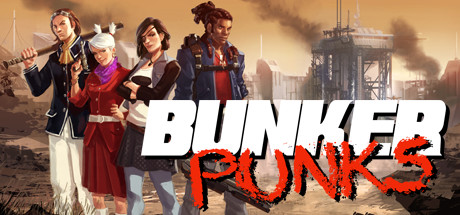
Bunker Punks

...Punks.  In Bunkers.  Let's go, this is Bunker Punks.

In the Apocalyptic future, everyone will be punks!

So, Bunker Punks is an old school shooter released in 2018.  It's a pretty simple and short game, so this review will be short.  It's a Rogue Light game, which means dying is part of the process of learning to win the game.

The story is simple: In the future, a bunch of cataclysmic events happened, and corporations take over the governments of the nations in the future.   It's not a distant future by any means, and you play as the Bunker Punks, who raids facilities to steal stuff to fund there movement to eventually overthrow the evil corporations. 

The gameplay is split between bunker building/strategy layer and the First person shooter run and gun levels.  You spend money earned during raids, on upgrading the bunker you live in, which upgrade damage, health, armor, or heals punks in certain instances during raids.  

During the raids, you kill drones, both the robotic and people kind, to collect money, tech, and new weapons or armor.  There's an elevator at the end of each level or floor, that is the exit point to the next floor, or the exit point of the raid, depending on what floor your on.  

When you inevitably die, you lose all progress...Except for the tech you earned, which you spend after you fail a play through, to unlock different armor,weapons, bunker base upgrades, and even more punks to play as so if you accidentally die as one punk, can continue as another. 

The weapons are split between pistols, shotguns, rifles, melee weapons, and explosive.  Pistols are generic medium range weapons, shotguns get a bonus to damage at short range, rifles get a bonus at long range, and explosive weapon have an area of effect of damage, meaning don't fire point blank.  I have never encountered a melee weapon yet, but presumably they do a lot of damage.

It's an okay game for what it is.  I give it 3.5 stars out of 5.  It's fairly solid, and I enjoyed it for what it was, and it was only 10-15 dollars.  I've spent more for worse products.

Anyway, see you all next time!

Sunday, September 5, 2021

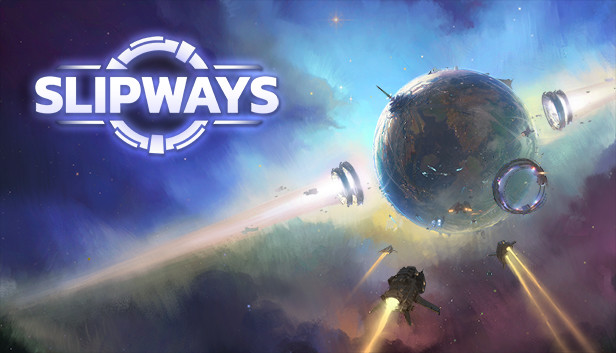
Slipways

I love 4X games. I also love Science fiction, so make a science fiction 4X game and I am there like a....a....very fast thing.  And that's how I ended up buying this game called Slipways that advertised itself as a 4X game you could play a session of within 30-60 minutes.

Slip on through to the other side!  ...wait it's Break on through.  Damn.

Slipways is a simple game: you colonize planets and then connect them through the titular slipways to level them up to make more money to repeat the process.  

To start with, you have just a wormhole to send probes through to scan signals for potential planets to colonize.  Some signals can turn out to be space station ruins, asteroids, or nothing at all.  However, near the wormhole there are tons of planets so at first you are spoilt for choice on what to colonize and what planetary specialization the colonized planet should be.

Each planet makes a certain export product but need a import product to go beyond the level 1 of 'struggling'.  Once they've got a import of the kind they require, for example mining planets require people to level up, they go to 'established'.  If you manage to export the product of the planet to 2 other planets and have two imports, plus supply the needed new products to level up, it becomes 'successful'  Level 4, the final level of a planet is 'prosperous', and it requires 6 imports or exports, and has to be connected to 3 'successful' planets as well.  

level 1 planets are a drain on your money and happiness of the sector of space your colonizing.  Not fixing level 1 planets means that the already bad situation will just get worse, but level 2 planets provide good income, level 3 even more, and level 4 the most.  They also provide more score, which is how your measured up at the end of the 25 years of the game session.  Luckily, time only moves forward when you do an action, eg, colonize a planet that takes 3 months, time move forward 3 months and then stops until you do another action.  Even better, most actions can be undone at a click of a button, except for scanning for planets, which can't be undone.

The game also has a tech tree, which you can research techs by building space station labs in the session, but the actual techs you can research are chosen by the council species you pick.  At the start of the game you pick 3 out 5 possible species to be on your council, which affects the techs you have, the types of starter perks you get, and what kind of missions you'll get to improve score will be given.  There is a science based council race, a industry one, a trade one, a food/ecology one, and a mining/resource gathering/exploration one. So you can somewhat cater to what playstyle you like.

The game starts with the campaign locked until you get a 3 star score rating.  And while the game is easy to play, it's extremely difficult to master.  My personal example, is that I didn't know leveling up planets was the way to win big points at the end of the game, as well as stop happiness from falling so far that the people in the sector kick you out before your 25 year term is up.  So I failed at least a dozen times my first dozen tries.

The game is also addictive in a weird way.  I have 10 hours on it at least, although some of that was in offline mode on steam, so who knows how many I played.  While it can be frustrating, I found it a relaxing in a way, and it became more so once I figured out the mechanics.  

Unfortunately it is not a 4x game, for several reasons, one of which is the total lack of competition ingame, but it's still a good game, so I give it 4 stars out of 5 for what it is.  Unfortunately it's a short experience, with most sessions being under 20 minutes for me, and I also don't see myself playing it again anytime soon, but it was only 16 or so dollars for me, and I think it's well worth the price.

That's all for now, see you next review!

Friday, September 3, 2021

Humankind

 I love Amplitude studios.  As I mentioned in Sid Meiers Civilization: Beyond Earth review, I like 4X games but hate civilization the game series.  Mostly it was just the setting I didn't like, so I was happy to take different settings with the exact same gameplay, but then Endless Legend from Amplitude was released.

A little backstory, before Endless Legend was Endless Space, which was a space 4x game, 4x games being where you control a nation or empire against other nations or empires.  Endless Space 1 was, honestly, safe.  It was good, but it didn't change things up much.

Endless Legend, set in the same universe but as a planet based fantasyish 4X game, did however.  It rocked my world, with each faction playing completely differently, eight to begin with, cities that actually expanded and grew into new tiles, and a research 'tree' that could have people select completely different techs but still be comparable in power.  I'll go into the details more when or if I ever review Endless Legend, but it was awesome.  Endless Space 2 was even better.

So when I heard Amplitude was going for Civilizations throne by making a historical 4x game, you bet I was interested.  I wishlisted that on steam so fast, and eagerly bought it when it was avlaible, and started playing.

Boy, was I in for some bad whiplash.  But more on that later, this is Humankind, the video game.

Whoa.  Someone broke the Time line bad.

Humankind starts with you making your avatar, and then starting a game immediately with no main menu in between, though there is one after you have started the game a second time.  As a character creator fanatic, I loved making my leader look good, even if I couldn't change the clothes.

Each game in Humankind starts with all players in the Neolithic era.  This means you just have a single tribe who will in this era look for food to grow and curiosity to understand the universe better.  Also you can kill animals wandering the land to earn fame stars as well.

Fame stars are in Humankind the way you get to the next era, one out of seven, including the Neolithic era.  While in the rest of the game you can get a total of three from each category of fame, those being researching new tech, growing population, building districts, expanding territory, making money, gaining the resource Influence, and killing enemy units.  In the Neolithic era, you only gain one star from three categorys, killing animals, growing more tribesmen, or finding enough curiositys in the game.  

This is my first problem with the game.  while it's nice to start off as a nomadic tribe and explore the area before setting up your first city, getting to the Ancient era, where game play properly begins, is extremely luck based in how fast you get there.  I wouldn't mind if I could skip the neothlitc era, but that's not an option in making a game session.

To win the game, though you can change how to win certain games slightly when you make one, you need to earn the most fame.  you usually earn fame through the aforementioned stars, but can earn them building great wonders of construction, doing a deed before other empires, and discovering natural wonders.  

When you get to the Ancient era, you pick a civilization, which gives one unique unit, one unique district to be built in your cities, and a unique passive that stays with your empire even when you change civilizations again at the start of another era.  On top of that, each civilization comes in a category that aligns with the categorys of fame stars I already mentioned, research, population gain, building districts, etc.  These, uh, ideologies come with their own set of bonuses, a passive and an active one you must activate.  For example, the ideologily of an expansionist not only gains more fame by grabbing territory, but also can enter other empires borders even when borders are closed. The Empires leaders won;t be happy about that, but you can do it.  

This brings me to diplomacy: Its works, but it's a bit...simple.  while it's nice you don't have to spend influence, a resource in Humankind that is gained in cities and used to make more cities and grab more land, when you are being diplomatic with other empires.  The feature I was most excited for is the badge system, which changes the empires AI personality and gives thme some passive traits that help in some way.  But it's a pain in the ass to get most badges, with me having to look up how to even unlock them.

Cities can build different districts to expand, along with building, well, buildings that don't expand the city but still help it.  Some districts, like the farmers quarter, only gives food and ignores forests or rock fields for industry, and you'll need a makers quarter to exploit those.  I liked the different quarters or districts you could make, and the unique ones were always a welcome addition to any city.

Unfortunately that's the last nice thing I have to say about Humankind.  there's two more major gameplay features I haven't even touched on yet, but I also found out they were entirely pointless to begin with.  That is Religion and Culture.  Culture is spread to other cities and territories even to enemy cities and territories, by building things that make influence.  Religion is spread through making holy sites once you unlock that feature.  The religion you follow and the culture/civics you follow gives you mild bonuses.  But, they don't give you fame or stars, or, really, anything at all.  The most you'll find is that if your culture is being subverted by another empire, you'll just have to get different civics occasionally from the ones you choose, but there so mild differences in them it's not even worth choosing civics or starting a religion most of the time.

Above all, Humankind, the magnum opus of Amplitude, as they've described it...strikes me as a very safe, kinda dull additon to the 4X genre.  I stopped playing and uninstalled Humankind after a mere 22 hours.  in Endless Legend, I have over a 1000 hours played on that game.  What happened?

I don't know, and I refuse to hypothesize, but I will give this a 2.5 stars out of 5.  but it was a close call to give it just 2 stars.  Anyway, hoping to get a new review out soon.  See you all next time.